


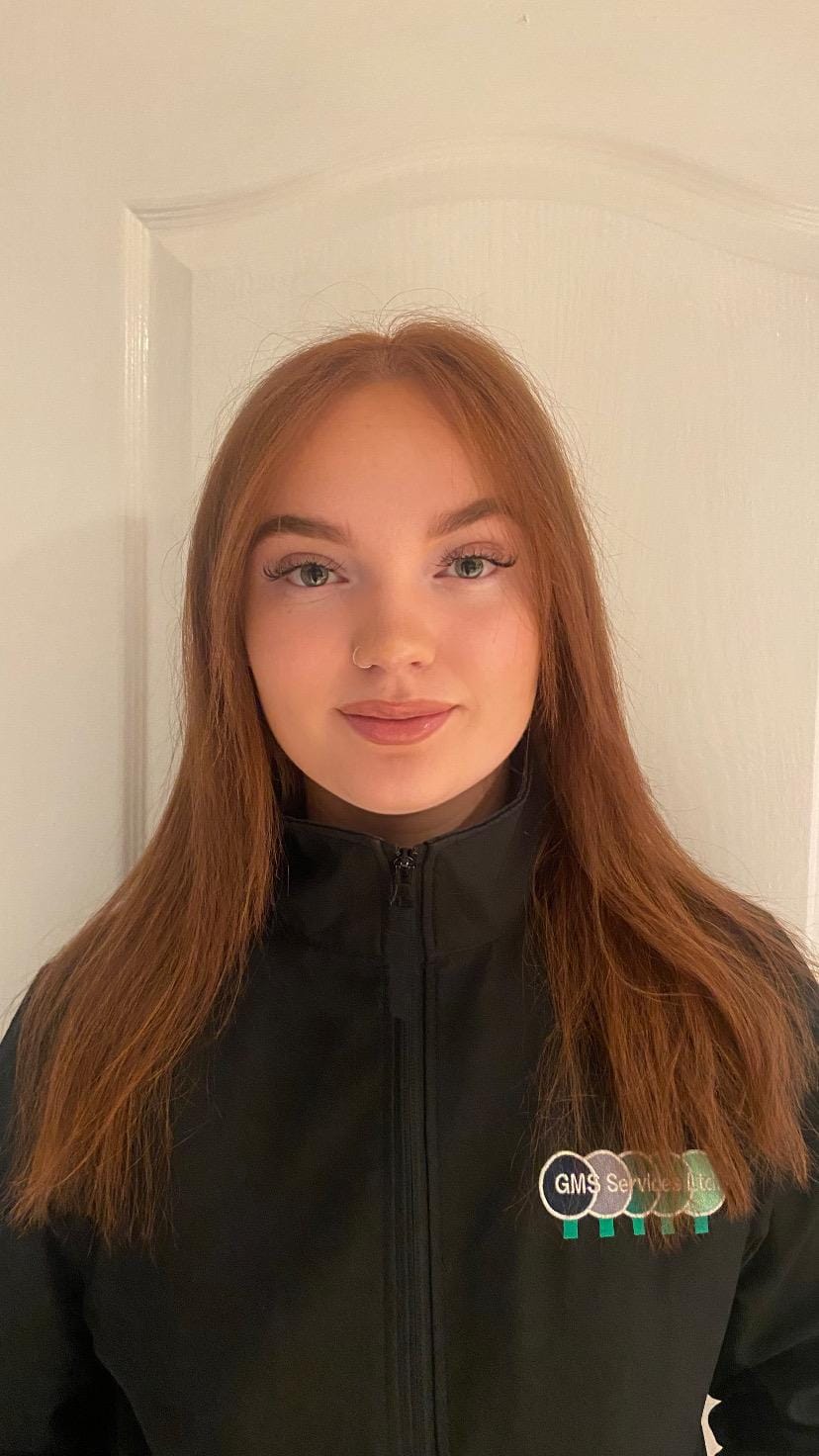
At GMS, we’re proud to celebrate the people who make our work not just productive, but truly enjoyable. Today, we’re shining a spotlight on Abi Rogers, whose journey with us has been nothing short of inspiring.
From Admin Desk to Engineering Sites
Abi joined GMS in September 2023 on a 12-month contract, originally covering maternity leave within our admin team. But it didn’t take long for Abi to discover a passion for the more hands-on side of what we do. As her contract came to an end, she made the bold decision to swap spreadsheets for site visits—joining the Water Hygiene Engineering team.
Now a trainee water hygiene engineer and risk assessor, Abi is busy delivering essential services across a wide range of sites. Her day-to-day includes monthly monitoring, TMV servicing, C&Ds, and conducting comprehensive risk assessments—often in locations far and wide.
A Team Player With a Love for Learning
Abi reflects on her experience so far with genuine appreciation for the people around her:
“The best thing about GMS is the people. Being the only female engineer was daunting at first, but the lads have been incredibly supportive. I’ve made so many genuine friendships, and I’m really thankful for that.”
Abi credits Sean Moran as one of her biggest influences at GMS:
“I’ve learned so much from Sean. He answers my hundreds of questions (no matter how silly they sound!) and always makes time to help me.”
A Memorable Moment…
Abi’s transition from admin to engineering came with its fair share of memorable moments—including a now-legendary first impression:
“When I was covering admin, I had to collect a client from reception for a meeting. I absolutely hate awkward silences, so I tried to break the ice by telling him I loved bacteria… I’ve not lived that one down since!”
Outside of Work: Pushing Limits
When Abi’s not out on site or solving problems, you’ll likely find her at the gym. She’s currently in training for her first solo Hyrox competition, scheduled for October (ticket permitting!). Her dedication, both inside and outside of work, is a reflection of her unstoppable drive.
Abi’s journey is a brilliant example of how passion, support, and a little bit of bravery can open new doors. We’re thrilled to have her on the team, and can’t wait to see where her path leads next.




Leave a Reply
You must be logged in to post a comment.