


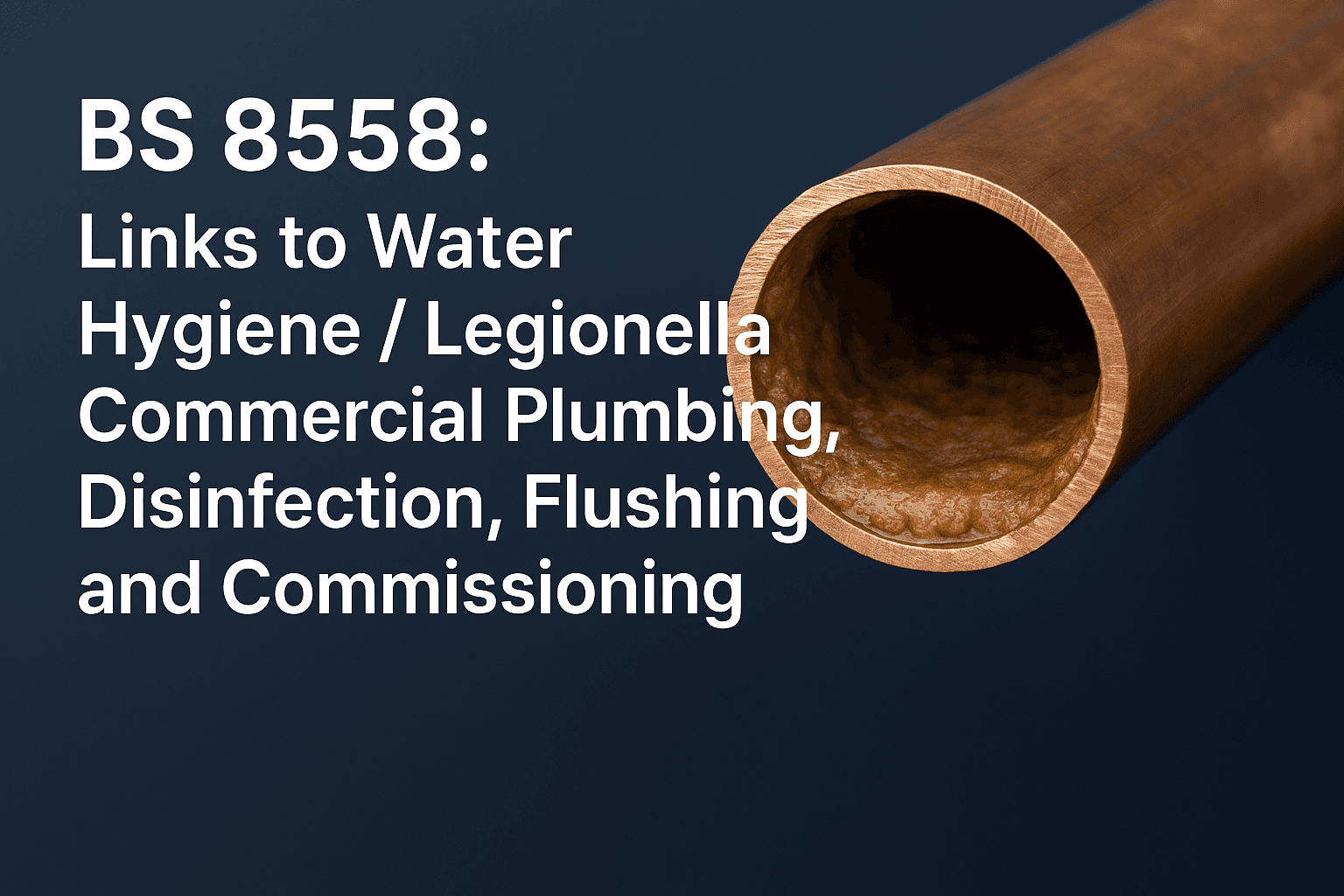
Ensuring safe and hygienic water systems is a critical responsibility for all building owners, facilities managers, and duty holders. In the UK, BS 8558 provides clear guidance on the design, installation, testing, and maintenance of domestic hot and cold water services – and its principles are central to preventing issues such as Legionella proliferation.
What is BS 8558?
BS 8558 is the UK implementation of European guidance for water systems, expanding on BS EN 806. It gives practical advice on:
- System design & installation – ensuring pipework layouts avoid stagnation and dead legs.
- Flushing & disinfection – setting out when and how to flush new systems, and the correct chemical or thermal disinfection processes.
- Commissioning – verifying that systems deliver safe water temperatures and flow rates before being handed over.
- Maintenance & hygiene control – embedding practices to prevent microbial growth, including Legionella.
The Link to Water Hygiene & Legionella Control
Legionella bacteria thrive in poorly managed water systems. BS 8558 aligns closely with ACOP L8 and HSG274, providing practical steps to mitigate these risks:
- Temperature control – maintaining hot water above 50 °C and cold below 20 °C.
- Regular flushing – ensuring all outlets are used or flushed to prevent stagnation.
- System disinfection – essential during installation, commissioning, or following system alterations.
- Record-keeping – documenting actions for compliance and assurance.
By following BS 8558, building operators reduce the risk of Legionnaires’ disease outbreaks while meeting regulatory expectations.
Why Commissioning, Flushing & Disinfection Matter
- Flushing removes debris and sediment from pipework that could otherwise harbour bacteria.
- Disinfection (chlorination or thermal) ensures systems start their operational life clean and safe.
- Commissioning checks verify that the system operates to design – particularly achieving safe temperatures at outlets.
When carried out correctly, these steps set the foundation for long-term water hygiene management and compliance with health and safety law.
How GMS Services Can Help
At GMS Services, our engineers are experts in water system safety and compliance. We provide:
- Comprehensive Legionella risk assessments.
- System flushing and disinfection services to BS 8558 standards.
- Ongoing Legionella monitoring and water hygiene programmes.
- Professional advice for commissioning and maintaining safe commercial plumbing systems.
We help clients across healthcare, education, housing, and commercial sectors protect their people and stay compliant.
Contact us today to discuss how we can support your building’s water hygiene strategy.




Leave a Reply
You must be logged in to post a comment.