


Understanding Water Pressure Issues in Commercial Buildings
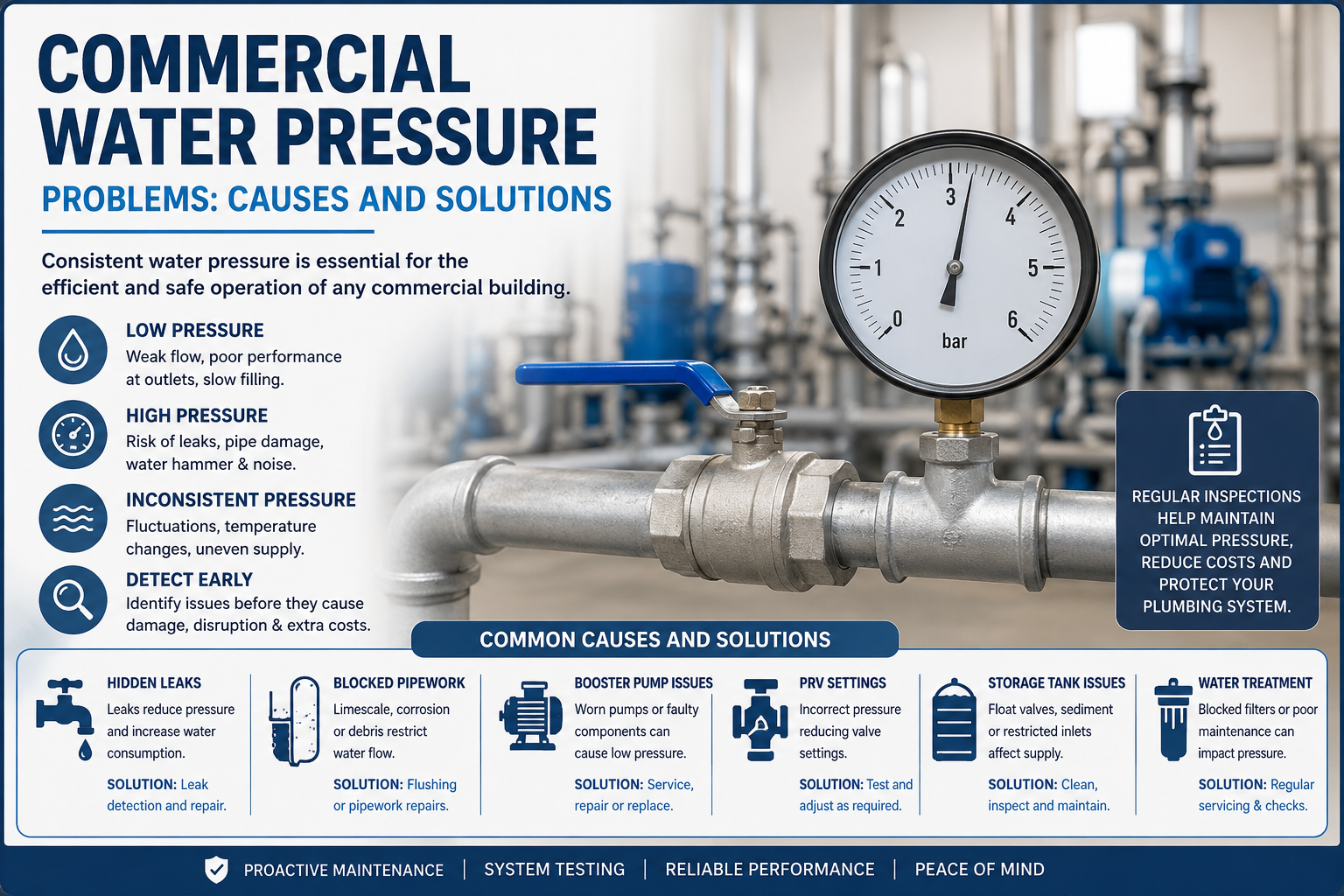
Consistent water pressure is essential for the safe and efficient operation of any commercial building. Whether it’s a healthcare facility, school, hotel, office block, or industrial site, inadequate or excessive water pressure can cause operational disruption, equipment damage, user complaints, and increased maintenance costs.
Many pressure-related issues develop gradually and can go unnoticed until they begin affecting building occupants or critical water systems.
Understanding the common causes of water pressure problems can help facilities managers identify issues early and implement effective solutions.
What is Water Pressure?
Water pressure refers to the force that pushes water through a plumbing system. In commercial properties, pressure must be sufficient to ensure all outlets and equipment receive adequate flow while remaining within the operating limits of the system.
Typical issues arise when pressure becomes:
- Too low
- Too high
- Inconsistent
- Unbalanced across the building
Any of these conditions can lead to operational and maintenance challenges.
Common Signs of Water Pressure Problems
You may have a water pressure issue if you notice:
- Weak flow from taps or showers
- Inconsistent temperatures at outlets
- Poor performance on upper floors
- Slow-filling toilets or tanks
- Pump systems running continuously
- Water hammer or pipe noise
- Frequent plumbing leaks
- User complaints about water supply
Early investigation can prevent minor issues developing into costly repairs.
1. Hidden Water Leaks
One of the most common causes of pressure loss is leakage within the plumbing system.
Even relatively small leaks can significantly reduce available pressure, particularly in larger buildings with extensive pipework.
Common leak locations include:
- Underground pipework
- Ceiling voids
- Plant rooms
- Flexible hoses
- Valve glands
- Tank connections
Warning signs:
- Unexplained increases in water consumption
- Constant pump operation
- Damp areas or staining
- Reduced pressure throughout the building
Solution
A leak detection survey can identify hidden losses before they cause extensive damage or unnecessary water costs.
2. Blocked or Restricted Pipework
Over time, pipework can become partially blocked due to:
- Limescale accumulation
- Corrosion products
- Sediment build-up
- Debris from maintenance works
Older galvanized steel systems are particularly susceptible to internal restrictions.
Symptoms include:
- Reduced flow rates
- Poor performance at specific outlets
- Uneven pressure across the building
Solution
Investigate affected sections using flow testing and inspections. In severe cases, pipework replacement may be required.
3. Failing Booster Pump Systems
Many commercial buildings rely on booster sets to maintain adequate water pressure, particularly in multi-storey properties.
A failing booster set can cause:
- Low pressure
- Pressure fluctuations
- Complete loss of supply to upper floors
Common causes include:
- Worn pumps
- Faulty pressure sensors
- Damaged expansion vessels
- Variable speed drive faults
- Control panel failures
Solution
Regular servicing and performance testing of booster systems can identify developing issues before they result in breakdowns.
4. Incorrect Pressure Reducing Valve (PRV) Settings
Pressure Reducing Valves are designed to control incoming mains pressure and protect downstream plumbing systems.
However, incorrectly adjusted or failing PRVs can create significant issues.
Symptoms:
- Low pressure throughout the building
- Pressure fluctuations
- Poor outlet performance
Solution
Pressure testing should be carried out upstream and downstream of the valve to verify correct operation and settings.
5. Excessively High Water Pressure
While low pressure often attracts attention, high pressure can be equally damaging.
Excessive pressure may lead to:
- Pipework leaks
- Joint failures
- Premature valve wear
- Water hammer
- Increased water consumption
Warning signs:
- Noisy pipework
- Frequent plumbing repairs
- Dripping outlets
- Failed TMVs or valves
Solution
Pressure monitoring and correctly installed PRVs can protect systems from excessive stress.
6. Inadequate System Design
Some buildings experience chronic pressure problems due to original design limitations.
Examples include:
- Undersized pipework
- Poor hydraulic design
- Inadequate storage capacity
- Insufficient booster capacity
These issues often become apparent when building occupancy increases or layouts are altered.
Solution
A hydraulic review can identify whether system upgrades are required to meet current demand.
7. Water Softener or Filtration System Issues
Poorly maintained water treatment equipment can also affect pressure.
Common causes include:
- Blocked filters
- Fouled resin beds
- Faulty control valves
- Partially closed bypass arrangements
Symptoms:
- Localised pressure reduction
- Reduced flow downstream of equipment
Solution
Routine servicing and maintenance ensure treatment systems continue operating efficiently.
8. Storage Tank and Float Valve Problems
Where cold water storage tanks are present, issues within the storage system can impact pressure and flow throughout the building.
Common problems include:
- Sticking float valves
- Restricted inlet pipework
- Sediment accumulation
- Inadequate replenishment rates
Solution
Regular tank inspections and maintenance help maintain reliable water supply performance.
Why Water Pressure Matters for Legionella Control
Water pressure issues are not only an operational concern; they can also affect water hygiene.
Poor flow conditions can contribute to:
- Stagnation
- Low turnover of water
- Temperature control issues
- Underused outlets
These factors can increase the risk of bacterial growth within water systems.
Pressure problems should therefore be considered as part of wider water hygiene and Legionella management programmes.
Preventative Maintenance Recommendations
To minimise pressure-related issues, facilities managers should implement regular inspections of:
- Booster sets
- Expansion vessels
- Pressure reducing valves
- Water softeners
- Filtration systems
- Storage tanks
- Distribution pipework
Routine monitoring can identify developing faults before they affect building operations.
Conclusion
Commercial water pressure problems can have a significant impact on building performance, user satisfaction, maintenance costs, and water hygiene.
Whether caused by leaks, failing booster systems, blocked pipework, or poor system design, early investigation is essential to avoid costly disruption.
By carrying out regular inspections, maintenance, and performance testing, organisations can maintain reliable water supplies, protect critical assets, and ensure their plumbing systems continue to operate efficiently.
Need Help Investigating Water Pressure Problems?
GMS Services provides commercial plumbing inspections, leak detection, booster set servicing, pressure investigations, water hygiene support, and remedial works for healthcare, education, hospitality, industrial, and commercial properties throughout the UK.
Our experienced engineers can identify the root cause of pressure problems and recommend practical, cost-effective solutions to restore system performance.




Leave a Reply
You must be logged in to post a comment.